AI is not going to fix your accident reports. Fix them yourself first.
goPrevina team ·
A few weeks ago Prevencionar published a summary of a Safety Science study that I haven't stopped thinking about. A group of researchers trained a language model to read accident and incident reports and classify the causes at four levels: the person, the task, the equipment and the organisation. It got it right between 72 and 82 per cent of the time, depending on the dataset. Not bad. Better than the methods they compared it with.
But what interests me is not the percentage. It's a sentence, almost in passing, in the conclusions: many of the reports were short and incomplete, and described what had happened while saying almost nothing about the conditions in which it had happened.
And I thought: of course. That's what's normal.
If you've read accident reports from small businesses, you know what I'm talking about. "The worker slipped in the loading area and hit his knee." Full stop. Date, time, body part, days off work. What was on the floor isn't there. Whether he was wearing the right footwear isn't there. Whether people were missing that day and he was doing the work of two isn't even considered. Sometimes because whoever fills in the report is in a hurry. Sometimes because the template doesn't ask. And often because the person filling it in knows perfectly well why it happened, but writing it down has consequences.
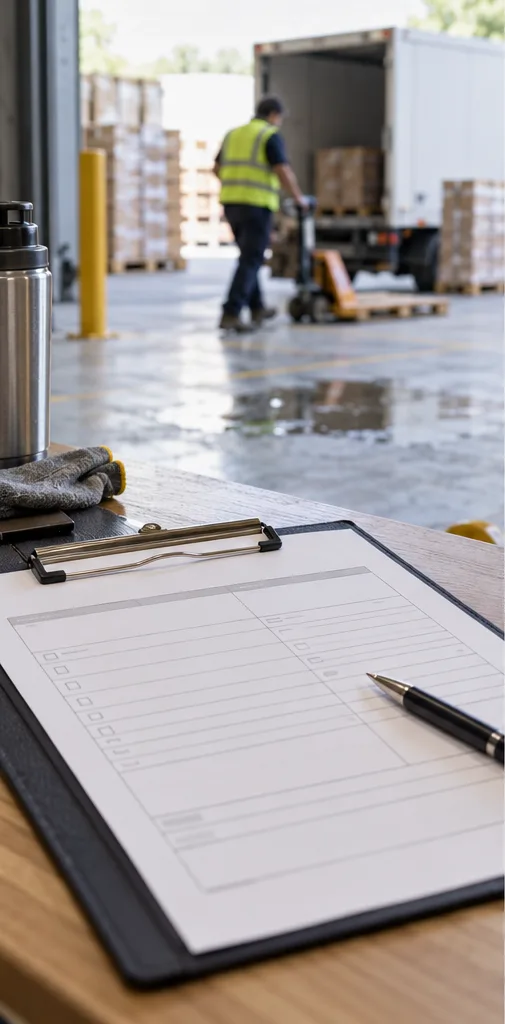
Here is my thesis, and it's quite uncomfortable for someone who sells software with artificial intelligence: AI cannot get out of a report what isn't in the report. You can have the best model in the world. If you give it "slipped and hit himself", it will give you back "cause: slip". Thanks, I knew that already.
This seems obvious, but nobody is talking about it. Everything I read about AI in health and safety is about what AI is going to do. Predict accidents, detect patterns, anticipate risks. And yes, all of that is possible. But it has a precondition that nobody wants to put in the headline because it doesn't sell: you need data that says something.
I say this from experience. When we started testing our own assistant with real customer reports, the problem wasn't the model. The model understood perfectly what we gave it. The problem was that what we gave it didn't amount to much. We had to go back and ask ourselves what a report would have to contain to be worth analysing.
This is what we came up with. It isn't science; it's what we've seen make the difference:
- What exactly the person was doing. Not "working in the warehouse". Which task, with what equipment, at what point in the working day. A slip at 8 in the morning and one at 7 in the evening on the last day of the week are not the same accident.
- What was different that day. This is the question that is almost never asked and the one that explains the most. Someone was missing. There was an urgent order. The usual machine was out of action. 90 per cent of the accidents I've seen have a "that day" behind them.
- What the risk assessment for that job says. And whether what it says has anything to do with what happened. If the risk was identified and the control measure wasn't being applied, that's a data point. If the risk wasn't even there, that's another data point, and a worse one.
- Who saw it and what they say. A paragraph in the words of the co-worker who was standing next to them is worth more than three pages of form.
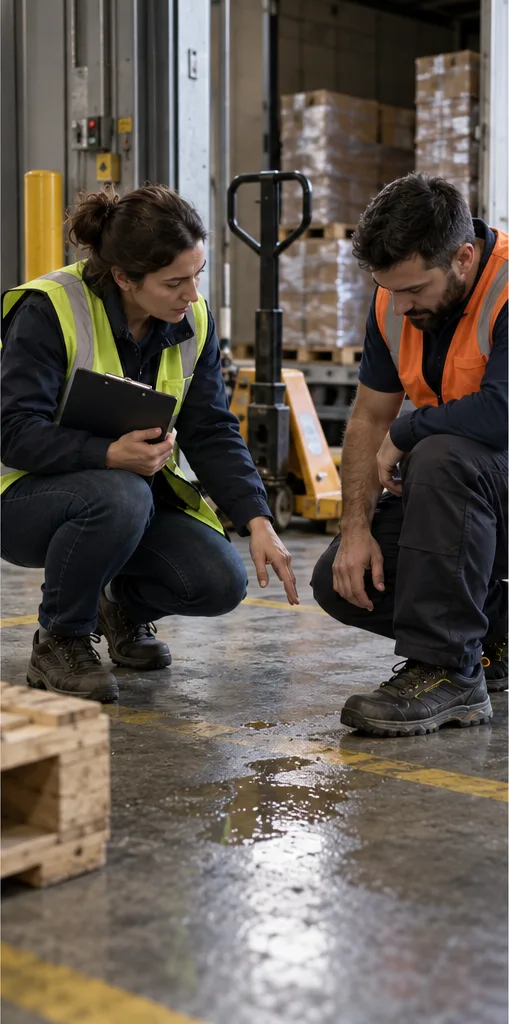
- What was decided, and who has to do it. With a name and a date. A report that ends with "staff are reminded of the importance of..." is a report that doesn't end.
None of this needs artificial intelligence. It needs a different template and, above all, for the person filling it in to feel that telling the truth isn't going to come back on them. That second part is culture, not technology, and no software is going to solve it. Not ours either.
What AI can do, once you have reports that say something, is what the model in the study did: read two hundred reports in the time it takes you to read one, and tell you that there is a "that day" that keeps coming up. That in three different accidents at three different sites someone was covering for someone else. A safety professional on their own doesn't see that, because nobody has time to read two hundred reports.

But the order matters. The report first. Then the AI. If you do it the other way round, all you achieve is automating ignorance.
If you're curious about the study, the Prevencionar summary is here. And if you feel like telling me what your accident investigation template looks like, I really am interested. It's one of the things we've learned most about by listening.