Irish farms: the farm safety risk assessment, step by step
goPrevina team ·
Most farmers we talk to know they are supposed to have "the safety thing" done. Fewer are sure which one applies to them, when it was last looked at, or where the copy is. It usually turns up in a drawer in the kitchen, signed three years ago, with a tractor on it that was sold last spring.
This article is a plain walk-through: what the law asks of a farm, what the farm risk assessment covers, and how to keep it alive through the year without it becoming a second job. It is general guidance, not legal advice. For anything specific to your farm, the Health and Safety Authority (HSA) and your adviser are the people to ask.
Risk assessment or Safety Statement: which one do you need?
Under the Safety, Health and Welfare at Work Act 2005, every employer has to identify the hazards in the workplace, assess the risks, and write down how they are controlled in a Safety Statement. A farm is a workplace like any other, so that applies to you.
The HSA makes this simpler for small farms. If three or fewer people work on the farm, completing and following the risk assessment that comes with the HSA Code of Practice for Preventing Injury and Occupational Ill Health in Agriculture meets the legal requirement to have a Safety Statement. If more people work on the farm, you need a full Safety Statement, based on a risk assessment of the farm.
Count everyone who works on the farm, not only those on the payroll. Family members who help regularly, part-time workers and relief milkers all count when you think about who is exposed to the risks. The HSA is also reviewing the farm Code of Practice, so check hsa.ie for the current version before you start.
What the farm risk assessment covers
The risk assessment is a set of questions grouped by hazard, with a list of controls for each one. The HSA online version has nine sections and an action list at the end. It goes through the things that cause most deaths and serious injuries on Irish farms:
- Tractors, vehicles and machinery. Handbrakes, guards on the power take-off shaft, who is allowed to drive what, and keeping people clear of moving machines in the yard.
- Livestock. Handling facilities, calving, the bull, and having an escape route whenever you are in a pen with animals.
- Slurry and buildings. Mixing slurry, gas, covers on tanks, and the state of sheds, roofs and gates.
- Falls from height. Ladders, roofs, bale stacks and loaders. Many of these jobs take ten minutes, which is exactly why they get done without the right equipment.
- Children, older people and your own health. Where children may and may not go, jobs that older family members should no longer do alone, and the strain of long days, chemicals, dust and noise.
For each hazard you tick the controls already in place, add any your farm needs, and anything still to do goes onto the action list with a date. That action list is the part that matters. A risk assessment with no actions is either a very safe farm or one nobody looked at closely.
Step by step
Walk the farm first, then sit down with the form. Go section by section and be honest: if the guard on the power take-off shaft is cracked, write it down. Agree the actions with whoever does the work, give each one a date, and sign the assessment. Then make sure everyone who works on the farm knows what is in it, especially the rules that apply to them, such as the PPE to wear for spraying or the rules for the bull paddock.
Keeping it alive through the year
The assessment should be reviewed at least once a year, and again whenever something changes on the farm: a new shed, a new machine, a new person, or after an accident or a near miss. The review does not mean starting again. It means going through the action list, crossing off what is done, adding what has changed, and signing it again.
In practice, the yearly review is the step that gets missed. Calving, silage and the winter all come first, and by the time anyone remembers, it is a year late.
How goPrevina and Nora remind you
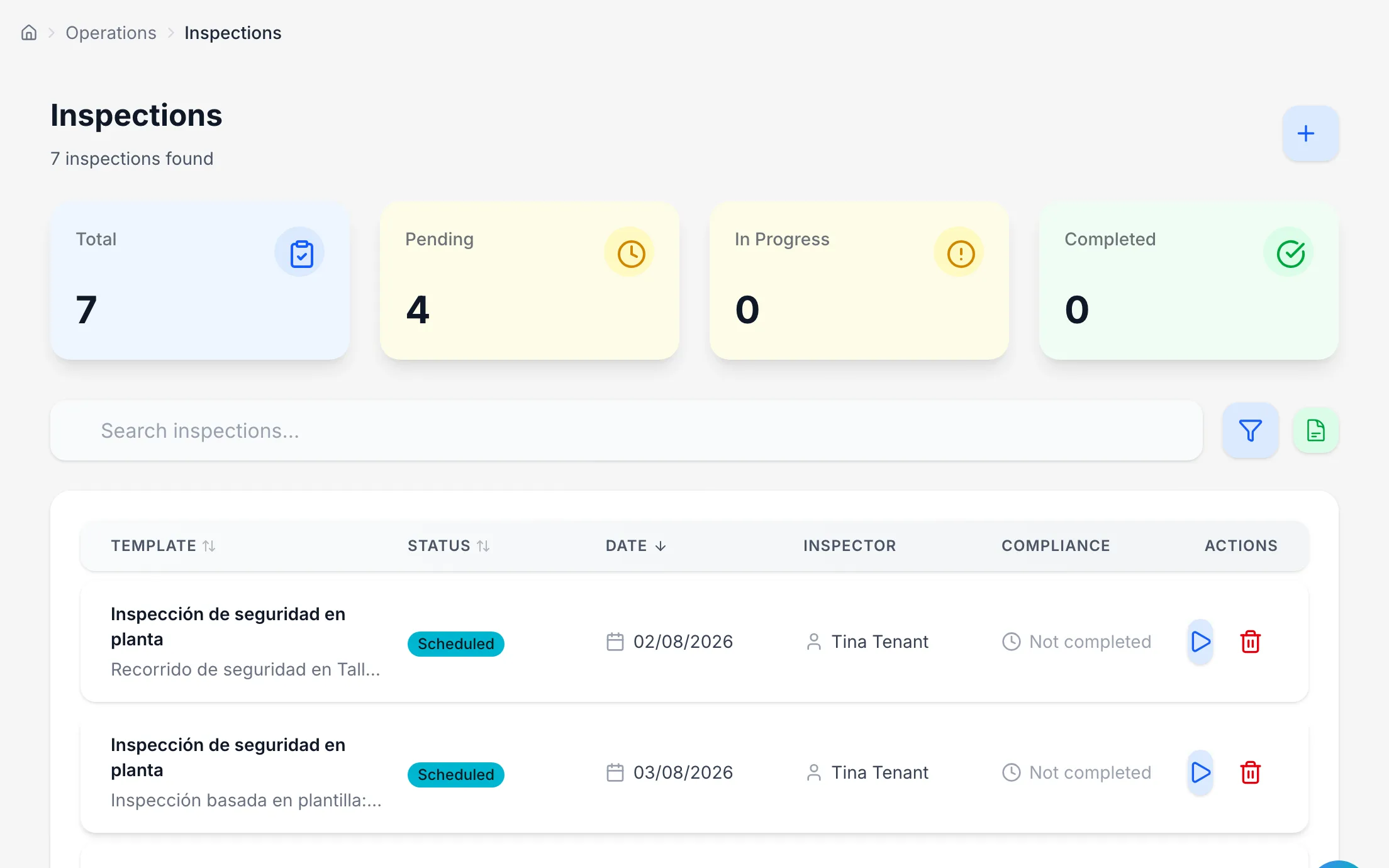
In goPrevina the farm risk assessment is kept with its actions, who is doing each one and by when. The review date is part of the record, so it shows up in Coming up, the list of what falls due in the next 30, 60 or 90 days, with a date to act by. Anything already late is shown separately, so it does not get lost under the rest.
Every Monday morning, Nora, the goPrevina assistant, sends you a short summary in the app and by e-mail: what is due in the next 30 days and what is already late. The farm risk assessment review sits on that list next to training certificates, health checks, inspections and Safe Pass renewals for anyone who also works on building sites. You can also ask Nora directly, in plain words, what is still open on the action list.
None of this does the walk round the yard for you. It makes sure the review does not slip by another year.
If you would like to see it with sample data already loaded, try the goPrevina demo. There is nothing to sign up for.